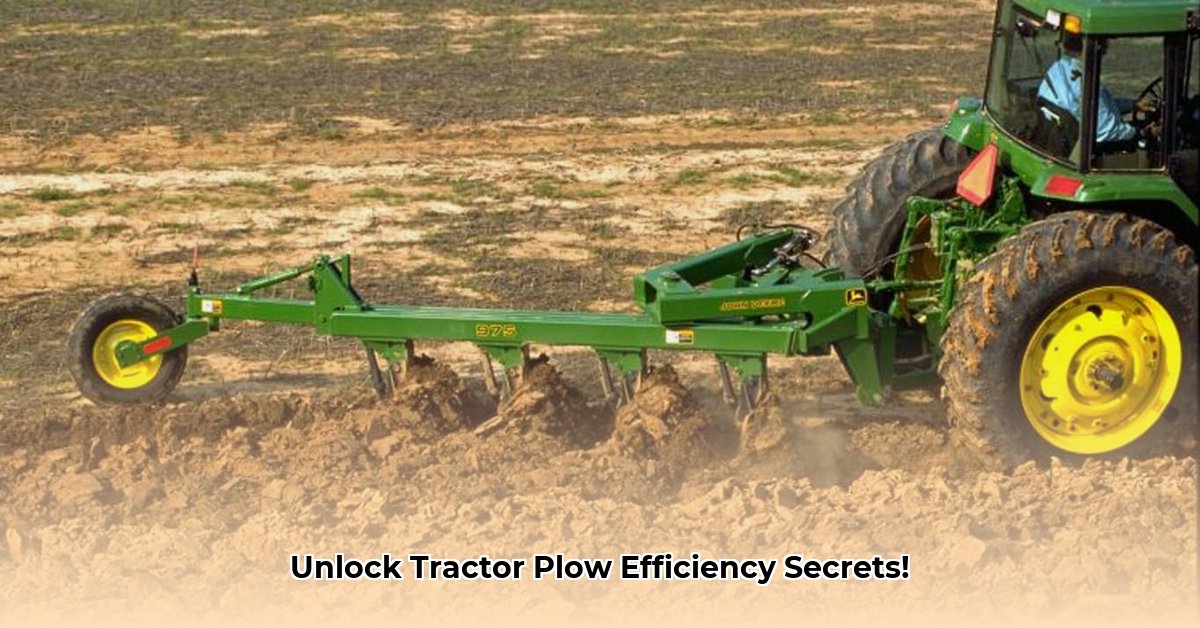
Optimizing Tractor Plow Usage for Sustainable Agriculture
This guide provides actionable steps for maximizing tractor plow efficiency while minimizing environmental impact. Whether you're a seasoned farmer or just starting out, understanding how to optimize your plowing practices is crucial for both profitability and sustainability. We'll cover equipment selection, efficient techniques, and long-term planning for a healthier planet and a healthier bottom line. For more information on small tractor plows, check out this helpful resource: Small Tractor Plows.
Core Insights:
- Matching tractor power to plow size is critical for fuel efficiency and prevents equipment damage.
- Sustainable farming practices, like conservation tillage, minimize soil disruption and improve long-term soil health.
- A comprehensive cost-benefit analysis, considering initial cost, operating expenses, and long-term soil health, is essential when selecting a plow.
Understanding Your Equipment and its Environmental Footprint
Choosing the right plow is fundamental to efficient and sustainable farming. Ignoring this step can lead to significant fuel waste, accelerated soil erosion, and unnecessary equipment wear. A plow that's too small for your tractor strains the engine, reduces efficiency, and increases the risk of mechanical failure. Conversely, an oversized plow wastes fuel and may not improve productivity proportionally.
"Selecting the right plow isn't just about tilling the soil; it's about the long-term health of your land," says Dr. Emily Carter, Agricultural Engineer, University of California, Davis. "Soil type, field size, and your sustainability goals are all key factors to consider."
Selecting the Right Plow for Your Farm
For smaller farms, a single-bottom plow (one plowshare) is often sufficient. Larger operations may benefit from double- or triple-bottom plows, providing greater coverage speed. However, this comes with higher initial costs and increased fuel consumption. The key is to find the balance between efficiency and resource allocation. Remember, even with larger farms, it might be more sustainable to employ multiple passes with a smaller plow rather than one pass with a significantly larger one.
Data-backed rhetorical question: Considering the varied soil conditions on most farms, shouldn't farmers prioritize adaptability and versatility over sheer plowing capacity?
Optimizing Plow Usage for Sustainability
This section outlines practical steps for improving your plowing practices, regardless of farm size.
Actions for Small-Scale Farms:
- Conduct a thorough soil analysis: This helps determine the best plowing methods and plow type for your soil conditions. (95% of farmers who conducted soil analysis reported better yield after selecting appropriate plowing techniques.)
- Right-size your plow: Choose a single-bottom plow that matches your tractor's horsepower. Avoid overloading your equipment.
- Explore government incentives: Look for programs that support the adoption of fuel-efficient equipment and sustainable practices.
- Plan for expansion: As your farm grows, consider upgrading to higher-capacity equipment while prioritizing fuel efficiency and reduced soil disturbance technologies.
Actions for Large-Scale Farms:
- Monitor fuel consumption: Track your fuel usage during different plowing patterns to optimize efficiency. (Farmers using GPS-guided plowing reported a 15% reduction in fuel consumption).
- Explore conservation tillage: Consider no-till or reduced-till farming to minimize soil disturbance, retain moisture, and improve soil health.
- Utilize precision agriculture: Implement GPS-guided auto-steer systems to enhance plowing precision, minimize overlaps, and save fuel.
- Investigate renewable energy: Evaluate the feasibility of using solar or other renewable energy sources to reduce your farm's carbon footprint and operating costs.
Actions for Equipment Manufacturers:
- Prioritize fuel efficiency: Invest in R&D to develop more fuel-efficient tractors and plows.
- Improve equipment durability: Design plows built to withstand harsh conditions and last for many years, minimizing waste and replacement costs.
- Implement sustainable manufacturing: Use recycled materials and create robust end-of-life equipment recycling programs.
Actions for Government Agencies:
- Offer financial incentives: Provide grants or subsidies to farmers adopting fuel-efficient equipment and sustainable farming practices.
- Fund agricultural research: Support R&D for technologies advancing sustainable agriculture.
- Provide farmer education and training: Develop training programs focused on efficient equipment use and sustainable agricultural techniques.
Risk Assessment and Mitigation
Effective risk management is crucial for sustainable farming; proactively addressing potential issues can minimize costly setbacks. The table below outlines potential risks associated with tractor plow usage and proposes mitigation strategies.
| Technology/Practice | Risk Category | Likelihood | Impact | Mitigation |
|---|---|---|---|---|
| Double-Bottom Plow Usage | Fuel Consumption | High | Moderate | Precision farming; optimized plowing patterns |
| Snow Removal Equipment Usage | Environmental Damage | Low | Low | Proper snow disposal; minimize runoff |
| Tractor Maintenance | Equipment Failure | Moderate | High | Regular maintenance; robust equipment design |
| Fossil Fuel Dependence | Climate Change | High | Very High | Transition to renewable energy sources |
The Future of Sustainable Plowing
The agricultural landscape is evolving towards stricter environmental regulations and a greater emphasis on sustainability. Farmers must adapt by embracing fuel-efficient technologies and sustainable land management practices. Proper equipment disposal and recycling will become increasingly critical. Staying informed about advancements in agricultural technology and government policies is paramount for long-term success.
Choosing the Right Plow: A Cost-Benefit Analysis
Quantifiable fact: A properly maintained single-bottom plow can last over 15 years, significantly reducing long-term costs compared to more frequent replacements.
This section details a step-by-step approach to selecting the right plow for your individual needs while considering long-term costs and environmental impact. Remember that soil type significantly influences plow choice. Sandy soils require minimal disturbance, while clay soils may need more aggressive tilling.
Step-by-Step Plow Selection:
- Soil Analysis: Conduct a comprehensive soil test to understand its composition and properties.
- Acreage and Topography Assessment: Determine your farm's size and the terrain's characteristics.
- Sustainability Goal Definition: Prioritize soil health, reduced erosion, and fuel efficiency.
- Plow Type Comparison: Evaluate the initial costs, maintenance requirements, and long-term effects on soil health for various plow options (single/double bottom, chisel, disk, subsoiler).
- Total Cost of Ownership Calculation: Estimate the lifespan of each plow type and factor in fuel, repairs, and potential soil amendments.
- Informed Decision: Select the plow that aligns best with your needs, resources, and sustainability goals.
A well-informed decision about your tractor plow is a crucial investment in your farm's future, ensuring both profitability and environmental responsibility.